
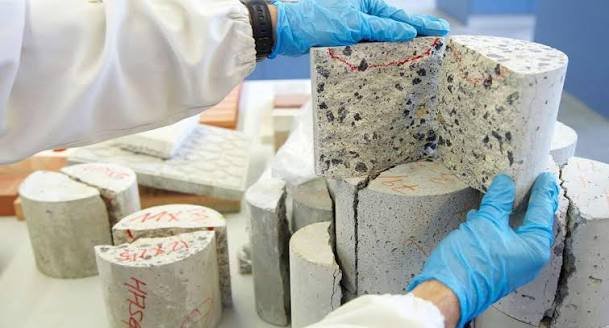
Compressive strength testing remains the primary method used to verify that a concrete mix meets its design requirements. Cubes or cylinders are cast at the time of pouring, cured under controlled conditions, and tested at specific intervals, typically 7 and 28 days, using a compression testing machine.
The 28-day result is generally treated as the reference strength, since concrete continues to gain strength over time as the hydration process progresses. Testing at 7 days is useful as an early indicator, but it should not be used in isolation to judge final quality.
Curing conditions have a significant impact on results. Samples that are not cured at the correct temperature and moisture level can show artificially low strength values that do not reflect the actual quality of the concrete used on site.
Consistent sampling, proper curing, and testing at a qualified laboratory all contribute to a compressive strength result that genuinely reflects the concrete placed in a structure, which is exactly what quality control is meant to verify.